
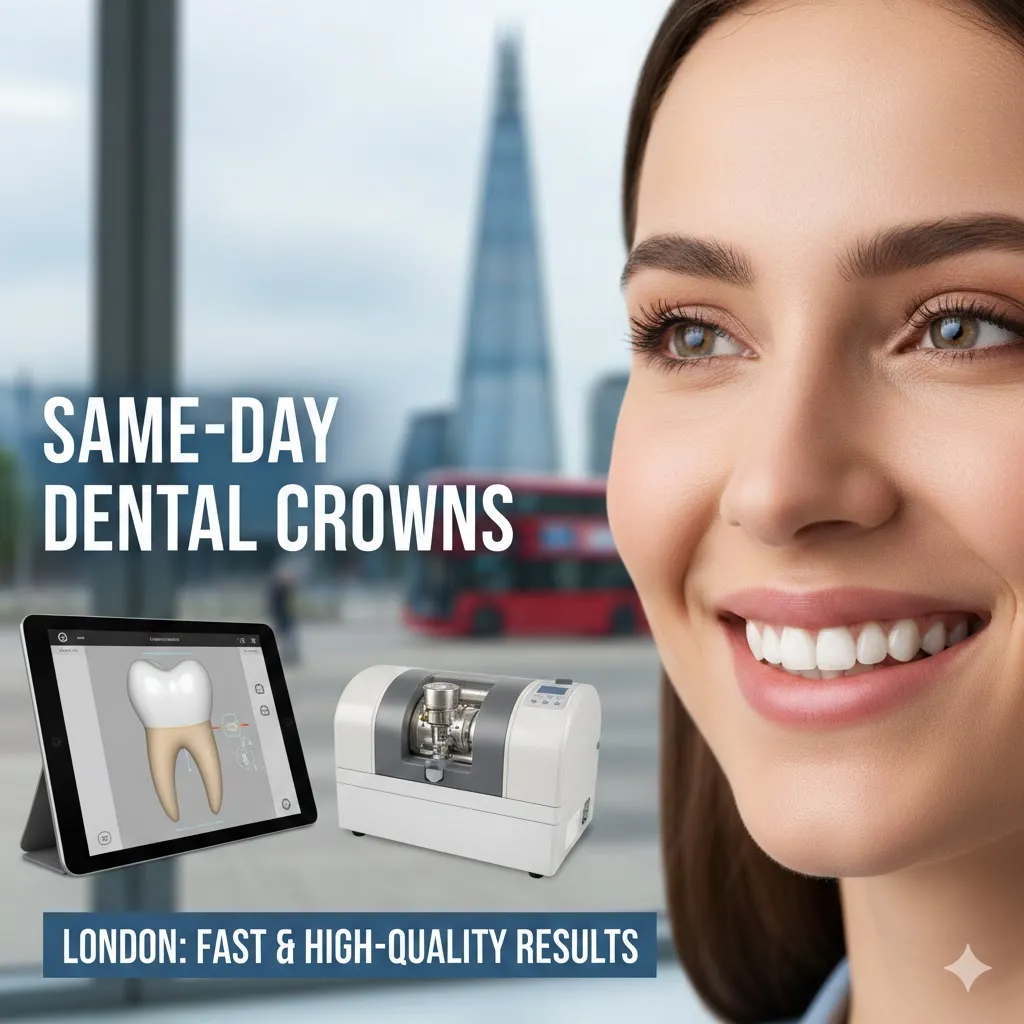
Damaged or weakened teeth no longer require weeks of waiting and multiple appointments. Advanced CAD/CAM technology now enables dentists to create custom dental crowns London patients can receive in a single visit, often within just 2-3 hours.
Understanding Same-Day Dental Crowns
Traditional crown procedures typically involve two separate appointments spanning 2-3 weeks. During the first visit, your dentist prepares the tooth and fits a temporary crown. You return weeks later once the permanent crown arrives from the dental laboratory.
Same-day crowns revolutionize this process through CEREC (Chairside Economical Restoration of Esthetic Ceramics) technology. A digital camera captures a 3D optical image of your prepared tooth, which the computer uses to design your crown. CAD/CAM technology then sends specifications to an in-office milling machine that carves your restoration from a ceramic block using diamond-coated instruments.
This innovative approach means you walk into the office with a damaged tooth and leave the same day with a beautiful, permanent restoration.
Why Choose Same-Day Crowns?
Convenience and Time Savings: The most compelling advantage is obvious—you complete your treatment in one appointment. No temporary crowns, no second visit, and no time off work for multiple appointments. The entire process from preparation to final placement typically takes 2-3 hours, making it perfect for busy professionals and families.
No Temporary Crowns: Traditional procedures require wearing uncomfortable temporary crowns for weeks while your permanent restoration is manufactured. Temporary crowns can loosen, break, or cause sensitivity. Same-day crowns eliminate this inconvenience entirely.
Superior Accuracy: Digital impressions using camera technology are more comfortable than traditional putty molds. The precision of computer-aided design ensures excellent fit and function. Many patients find digital scanning especially beneficial if they have strong gag reflexes.
Immediate Results: You see and approve your crown design before it's created. Any adjustments happen while you're still in the chair, ensuring you're completely satisfied before leaving the office.
When Do You Need a Dental Crown?
Crowns help reinforce teeth weakened from large fillings or root canal treatment when natural tooth structure is no longer sufficiently strong. Understanding when crowns become necessary helps you make informed decisions about your oral health.
Protecting Damaged Teeth: Teeth with significant decay, large fillings, or cracks benefit from crown protection. The crown acts as a helmet, distributing biting forces evenly and preventing further fracture.
After Root Canal Treatment: Root canal therapy removes the tooth's blood supply, making it more brittle. Crowns protect these vulnerable teeth from breaking during normal chewing.
Improving Appearance: Severely discolored, misshapen, or worn teeth receive dramatic cosmetic improvement through crown placement. Modern materials match your natural tooth color perfectly.
Supporting Dental Work: Crowns anchor dental bridges London patients use to replace missing teeth. They also provide the visible tooth portion for dental implants, completing your smile restoration.
Types of Crown Materials Available
Choosing the right material impacts both appearance and longevity. Your dentist recommends options based on the tooth's location and your specific needs.
All-Porcelain Crowns: These offer the most natural appearance, making them ideal for front teeth. Porcelain crowns seamlessly blend with the tone and contour of natural teeth. They're metal-free, eliminating the dark line sometimes visible at the gum line with other crown types.
Porcelain-Fused-to-Metal: These crowns combine metal strength with porcelain aesthetics. The metal framework provides durability while the porcelain exterior maintains a tooth-like appearance. They work well for both front and back teeth.
Zirconia Crowns: This extremely strong ceramic material offers excellent durability with natural aesthetics. Zirconia crowns resist chipping and wear, making them suitable for people who grind their teeth.
Gold and Metal Alloys: Gold crowns are known for exceptional durability and strength, typically made from combinations of gold, copper, nickel, and chromium. While highly durable, their appearance makes them less popular for visible teeth.
The Same-Day Crown Procedure
Understanding what happens during your appointment reduces anxiety and helps you prepare appropriately.
Your visit begins with examination and discussion of treatment options. Once you decide to proceed, your dentist administers local anesthesia to ensure comfort throughout the procedure.
The dentist carefully removes any damaged areas of the tooth to create a solid foundation, then cleans and dries the tooth before applying a mildly acidic gel to create a rough surface for better bonding.
Next comes digital imaging using the intraoral camera. This painless scanning process takes just minutes and provides incredibly detailed information for crown design. You can watch on a computer screen as your dentist designs your crown, adjusting shape and color to match surrounding teeth perfectly.
The milling machine then fabricates your crown from a high-quality ceramic block. While this happens, you can relax, read, or even catch up on work. Once completed, your dentist carefully tries in the crown, checking fit, bite, and appearance.
Final adjustments ensure perfect comfort and function. The crown is then bonded to your tooth using strong dental cement. After polishing, your treatment is complete—all within a single appointment.
Cost Considerations
Dental crowns London pricing reflects the expertise, technology, and materials involved in creating these custom restorations.
You can expect to pay between $1,300 to $1,400 per crown, though costs vary based on material choice, tooth location, and treatment complexity. While same-day crowns may cost slightly more than traditional two-visit procedures, many patients find the convenience worth the difference.
Consider the value proposition: fewer appointments mean less time away from work, no temporary crown expenses, and immediate functionality. Many dental practices offer financing plans, making quality restorations accessible regardless of your budget.
Insurance coverage varies by plan. Most dental insurance covers a portion of crown costs when medically necessary rather than purely cosmetic. Check with your provider to understand your specific benefits.
Caring for Your New Crown
Dental crowns often last over 15 years with proper care. Protecting your investment requires consistent oral hygiene and smart habits.
Brush twice daily using fluoride toothpaste and a soft-bristled brush. Pay special attention to the area where your crown meets the gum line, as bacteria can accumulate there. Floss daily, being gentle around the crown to avoid dislodging it.
Avoid using your crowned tooth for activities like opening packages, biting nails, or chewing ice. While crowns are strong, these behaviors can cause chips or fractures. If you grind your teeth at night, discuss a protective night guard with your dentist.
Regular dental check-ups allow your dentist to monitor your crown's condition and address any concerns early. Professional cleanings remove buildup that home care might miss.
Choosing Your Crown Provider
Selecting a dentist experienced with same-day crown technology ensures optimal results and satisfaction.
Look for practices that have invested in CEREC or similar CAD/CAM systems. Ask about the dentist's training and how many same-day crowns they've completed. Experienced practitioners produce better-fitting, more aesthetic results.
Read patient reviews focusing on crown procedures specifically. Pay attention to comments about comfort, communication, and final results. Before-and-after photos provide visual evidence of the dentist's skill.
Schedule a consultation to discuss your specific situation. A quality dentist takes time to explain options, answer questions, and ensure you feel confident about treatment.
Taking Your Next Step
Same-day dental crowns London services offer remarkable convenience without compromising quality. If you're living with a damaged, weakened, or unattractive tooth, this technology provides fast, reliable restoration.
Start by researching qualified providers in your area who offer same-day crown services. Most practices provide free consultations where you can learn about candidacy, see the technology, and understand costs.
Don't let damaged teeth compromise your smile, comfort, or oral health. Modern dentistry makes restoration faster and easier than ever before.
Frequently Asked Questions
How long do same-day dental crowns last?
Same-day crowns typically last 15+ years with proper care, comparable to traditional laboratory-made crowns. Their longevity depends on material choice, location in your mouth, oral hygiene habits, and regular dental maintenance.
Are same-day crowns as strong as traditional crowns?
Yes, same-day crowns made from high-quality ceramic materials offer strength and durability equivalent to laboratory-made crowns. The materials and bonding techniques used are identical; only the fabrication location differs.
Does getting a same-day crown hurt?
The procedure is performed under local anesthesia, so you won't feel pain during treatment. Some sensitivity afterward is normal but typically mild and resolves within a few days. Most patients report minimal discomfort.
Can I eat normally after getting a same-day crown?
Yes, once the anesthesia wears off, you can eat normally. Avoid extremely hard or sticky foods for the first 24 hours while the bonding fully sets. After that, treat your crown like a natural tooth.
How much does a same-day crown cost in London?
Same-day dental crowns in London typically cost between $1,300-$1,400 per tooth. Pricing varies based on material choice, tooth location, and treatment complexity. Many practices offer payment plans to make treatment affordable.